#1

Freqtrade
The reference open-source bot: free, auditable, keys never leave your machine - at the cost of Python skills and patience.
Self-hosted Open source Free tier US ok
Jurisdiction is a hard filter - these platforms document US availability.
Short answer: Freqtrade is our top-rated US-available bot as of 2026-10-18 (8.1/10), free.
bots on this page: 16 · fully reviewed (active): 16 · free or with a free tier: 13 · need no third-party API keys: 8
quick picks
The reference open-source bot: free, auditable, keys never leave your machine - at the cost of Python skills and patience.

The open-source market-making framework - community-owned, 318 connectors, and the only bot line with institutional-grade pedigree.
Privacy-first desktop bot running locally on your machine, now on a single $29/month plan - the self-hosted sweet spot between Freqtrade's effort and cloud subscriptions.

Polished multi-exchange grid/DCA platform with 17 exchanges, 7-day no-card trial and solid support reputation.

The quant's choice: MIT-licensed research framework where backtesting is free forever and lifetime licenses unlock live trading - clean model, serious tooling.
Open-source Python bot with web UI and plugin ecosystem - the friendliest on-ramp into self-hosted bot trading.
The easiest no-code entry into bot trading - if-this-then-that rules across crypto, on-chain and even stocks, with a real free tier.

The most ambitious open-source project in the niche: visual strategy design, data pipelines and a token economy - steep curve, zero cost, no data collection.
Veteran cloud platform with a genuine free tier, AI strategy designer and the broadest copy-bot marketplace.
16 free built-in bots inside the exchange itself - zero subscription and no third-party API keys, at 0.05% per side.

The TradingView-signal specialist: real free tier, 30-50% lifetime affiliate program and free Premium tools when trading on Hyperliquid.
Terminal-plus-bots for active traders - strong scanners, 5-day no-card trial and a real 30-day refund window.

Public-domain (Unlicense) grid/martingale futures bot for Bybit, OKX, Binance, Bitget and Hyperliquid - raw power for developers, invisible for everyone else.
The most established cloud bot platform - deep features, real API-key incident history, now OAuth-hardened.

Veteran platform with the deepest scripting (HaasScript) and a rare self-hosted TradeServer lane - power users only.
Beginner-focused cloud platform for grid/DCA - pricing unverifiable from here, so treat plan details as indicative.
| Bot | Type | Price | Free tier | Trial | US | EU | Keys | Status |
|---|---|---|---|---|---|---|---|---|
| Freqtrade | Self-hosted | free | yes | - | US | EU | self-hosted | - |
| Hummingbot | Self-hosted | free | yes | - | US | EU | self-hosted | - |
| Gunbot | Self-hosted | $29/mo | - | - | US | EU | self-hosted | - |
| Bitsgap | Cloud platform | $23-149/mo | yes | 7 days, no card | US | EU | API keys | - |
| Jesse | Self-hosted | $0-1599/mo | yes | - | US | EU | self-hosted | - |
| OctoBot | Self-hosted | $0-29.99/mo | yes | 7 days, no card | US | EU | self-hosted | - |
| Coinrule | Cloud platform | 0.02% of volume | yes | - | US | EU | API keys | - |
| Superalgos | Self-hosted | free | yes | - | US | EU | self-hosted | - |
| Cryptohopper | Cloud platform | $29-129/mo | yes | 3 days, no card | US | EU | API keys | - |
| Pionex | Exchange-native | 0.05% per trade | yes | - | US | EU | no keys | - |
| WunderTrading | Cloud platform | $0-100/mo | yes | 7 days, no card | US | EU | API keys | - |
| Altrady | Cloud platform | $30-97/mo | yes | 5 days, no card | US | EU | API keys | - |
| Passivbot | Self-hosted | free | yes | - | US | EU | self-hosted | - |
| 3Commas | Cloud platform | $15-140/mo | - | 3 days, no card | US | EU | API keys | - |
| HaasOnline | Cloud platform | $19.99-249.99/mo | - | 7 days, no card | US | EU | API keys | - |
| TradeSanta | Cloud platform | $14-70/mo | yes | 14 days, no card | US | EU | API keys | - |
Live values from our database - details and caveats in each review. "-" = not documented.
Jurisdiction is the first filter on this site's finder for a reason: it eliminates lanes before quality is even discussed. The map:
The honest hierarchy for US residents: self-hosted software (Freqtrade, Hummingbot - no venue restrictions in the license, keys stay local[5][6]) connected to a US-regulated venue; Pionex's US entity for no-key native bots[4]; cloud platforms with documented US-venue support (Binance.US, Coinbase, Kraken connectivity varies by plan and provider). Everything else - the offshore native suites, the sniper lane - is a terms violation waiting to happen.
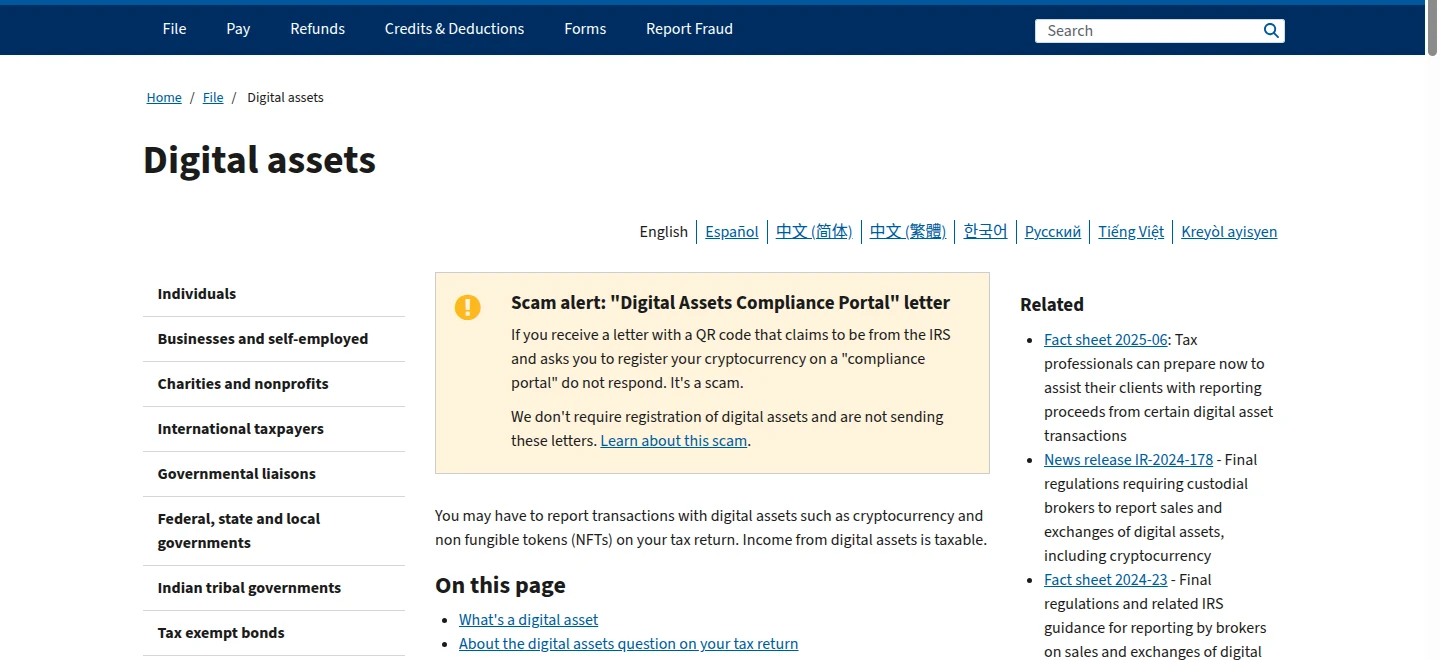
Automated strategies multiply one IRS fact: every disposal is a taxable event under property treatment[1], and the broker now reports proceeds on Form 1099-DA[2]. Bot volume turns that into a records discipline: FIFO is the default unless specific units are identified with adequate records[3] - which is a bookkeeping decision to make before the tax year, with exports from the venue or the bot itself.
Practical setup for US bot traders: export fills weekly (venue ledger or bot journal), track basis including fees per the IRS FAQ[3], and reconcile against the 1099-DA when it arrives - mismatches between broker-reported proceeds and your journal are exactly what audits start with. Our taxes and records guide carries the full workflow.
No-key native bots, documented access: Pionex US - grid/DCA at 0.05% per side[4]. The rest of the native bot suites (Binance global, OKX, KuCoin, Gate, Bybit, Bitget) gate US residents; their global versions are not a workaround.
Maximum control: self-hosted Freqtrade or Hummingbot on a VPS, connected to the US-regulated venue of your choice[5][6]. The self-hosted ops reality applies unchanged; the custody and compliance stack stays domestic.
Cloud convenience: the platforms that document US-venue connectivity - verify the venue list per plan before subscribing (plan reshuffles were frequent in 2025-26). 3Commas and peers list supported exchanges; our reviews carry the dated tables.
The most common US-trader mistake is assuming the big offshore bot suites have "a US version somewhere". As of our last verification, Binance's global bot suite, OKX, KuCoin, Gate, Bybit and Bitget native bots all gate US residents in their terms[7] - the same terms that govern withdrawals. The sniper and DEX lane adds no exceptions. The documented-access list for native bots is short (Pionex's US entity), which is why this page's US lane concentrates on cloud platforms with US-venue connectivity and self-hosted software.
The verification routine for any "US available" claim: the terms page (is the US named in restrictions?), the KYC flow (does onboarding accept your state?), and the withdrawal path (tested with the smallest possible amount). Reviews and marketing both age faster than terms pages.
The same skepticism runs in reverse for platforms that over-block: some cloud tools default to hiding US users from onboarding even when a US-legal entity exists (Pionex's two-entity structure is the live example[4]). The practical resolution is contacting support with your state and asking for the entity that will hold your funds - then verifying that entity's name in the terms you accept. Documentation, not reputation, is the US lane's currency: every claim on this page carries the date we verified it, and your own verification should carry a newer one. That discipline costs minutes and protects balances; it is the cheapest compliance tool in this lane. Run it before funding, after any platform announcement, and whenever an entity name appears that you cannot match to a regulator's registry - the registry check is the one step no offshore operator survives.
The lane most US bot traders actually end up in: open-source software on their own hardware, connected to a US-regulated venue. Freqtrade and Hummingbot place no geographic restrictions - they are software[5][6] - so the jurisdictional surface is only the venue you connect to and the records you keep. That concentrates the whole compliance question into venue selection, which is a solvable, documented decision - unlike offshore terms pages, which are a permanent sword hanging over withdrawals.
Setup notes specific to US readers: connect to venues with clean API documentation and stable 1099-DA reporting (your tax reconciliation depends on the venue's ledger quality[2][3]); keep the bot's fill journal as the primary record, since venue UIs bury per-fill detail; and run the self-hosted ops checklist unchanged - the jurisdiction changes the venue, not the maintenance.
The honest trade-off: this route trades the one-click convenience of native bot suites for control and documented access. Our guides carry the full setup path - the how bots work guide for the execution loop, the API key security guide for the key handling that replaces native bots' no-key model.
Two failure modes recur in US-restricted markets, both self-inflicted. The first is the VPN workaround (covered above) - a terms violation that converts balances into hostages. The second is the "US-friendly" offshore pitch: platforms that accept US signups while their terms quietly disclaim US users, or that operate no US legal entity at all. The test is the same for both: who holds your funds, under which legal entity, with what recourse? "No KYC" is not an answer - it is the pitch of the structure with the worst recourse, and the FCA's warning list shows bot-branded versions targeting exactly these searches[8].
The positive framing: US regulation, whatever its frictions, buys the reporting framework (1099-DA[2]), the recourse framework, and venues that cannot vanish with deposits without consequence. Bot traders who treat those as features - and build records discipline around them[1][3] - end the year with fewer surprises than the offshore cohort, in both the account and the tax file.
Regulatory exposure. Offshore operators avoid US licensing requirements by blocking US residents in their terms - enforcing via KYC. The block is contractual, so "using a VPN" converts a terms violation into frozen funds. The honest answer is documented US availability.
Self-hosted open source (Freqtrade, Hummingbot - software with no venue restrictions; the venue you connect to matters[5][6]), Pionex via its separate US entity, and cloud platforms that document US-accessible exchange support. Most offshore exchange-native bot suites and the sniper lane do not document US access.
We do not recommend it - it violates the platform's terms, and the practical consequence is frozen funds and forfeited balances at exactly the moment you need withdrawals. The terms risk is yours alone; no bot feature offsets it.
Broker reporting: US exchanges report digital-asset proceeds to the IRS on Form 1099-DA[2]. Automating trades does not change the property-treatment rules - every disposal is a taxable event[1], and bot volume multiplies the record-keeping. Our [taxes guide](/guides/taxes-and-records/) covers the bookkeeping.
The default is FIFO unless you identify specific units with adequate records[3]. Bot traders accumulate thousands of small disposals - which makes specific-ID bookkeeping (and its tax optimization) a records problem, best solved before the tax year, not in April.
US-regulated venues: Coinbase, Kraken, Binance.US, Gemini and peers. Support varies by platform - cloud tools document which venues they connect for US users; native bot suites are mostly offshore-only. Our per-bot reviews list documented availability.
Pionex operates a separate US entity with its own onboarding - the global platform gates US residents. Feature coverage and fee schedule (0.05% spot) carry over per our verification[4]; availability details live in our Pionex review.
Plan-level features do; venue connectivity is the filter - a free tier that cannot reach a US-regulated exchange is a demo. Verify the venue list before investing configuration effort[5].
The FTC's patterns apply verbatim[7], plus a US-flavored one: offshore platforms marketed as "no-KYC" to US residents are advertising their own terms violation - assume funds are one audit away from frozen. The FCA's warning list shows the bot-branded versions[8].
No - the trades are identical to the IRS regardless of where the software ran[1][3]. Self-hosting changes custody and ops, not reporting; venue records remain the primary source, and 1099-DA reporting arrives from the broker[2].
Money-transmission and licensing rules vary by state and mostly bind venues, not software. Practical rule: choose venues licensed in your state and document availability from their pages - then the bot layer inherits the compliance instead of fighting it.