#1
Freqtrade
The reference open-source bot: free, auditable, keys never leave your machine - at the cost of Python skills and patience.
Self-hosted Open source Free tier US ok
Your hardware, your keys, your strategy - the control-maximizing lane.
Short answer: Freqtrade is our top-rated self-hosted bot as of 2026-10-18 (8.1/10), free.
bots on this page: 7 · fully reviewed (active): 7 · free or with a free tier: 6 · need no third-party API keys: 7
quick picks
The reference open-source bot: free, auditable, keys never leave your machine - at the cost of Python skills and patience.

The open-source market-making framework - community-owned, 318 connectors, and the only bot line with institutional-grade pedigree.
Privacy-first desktop bot running locally on your machine, now on a single $29/month plan - the self-hosted sweet spot between Freqtrade's effort and cloud subscriptions.

The quant's choice: MIT-licensed research framework where backtesting is free forever and lifetime licenses unlock live trading - clean model, serious tooling.

Open-source Python bot with web UI and plugin ecosystem - the friendliest on-ramp into self-hosted bot trading.

The most ambitious open-source project in the niche: visual strategy design, data pipelines and a token economy - steep curve, zero cost, no data collection.

Public-domain (Unlicense) grid/martingale futures bot for Bybit, OKX, Binance, Bitget and Hyperliquid - raw power for developers, invisible for everyone else.
| Bot | Type | Price | Open source | Backtest | Paper | Custom code | Exchanges | US | Founded |
|---|---|---|---|---|---|---|---|---|---|
| Freqtrade | Self-hosted | free | yes | yes | yes | yes | 11 | US | 2017 |
| Hummingbot | Self-hosted | free | yes | yes | yes | yes | 50 | US | 2018 |
| Gunbot | Self-hosted | $29/mo | - | yes | yes | yes | 20 | US | - |
| Jesse | Self-hosted | $0-1599/mo | yes | yes | yes | yes | 12 | US | 2018 |
| OctoBot | Self-hosted | $0-29.99/mo | yes | yes | yes | yes | 12 | US | 2018 |
| Superalgos | Self-hosted | free | yes | yes | yes | yes | 15 | US | 2019 |
| Passivbot | Self-hosted | free | yes | yes | yes | yes | 8 | US | 2020 |
Live values from our database - details and caveats in each review. "-" = not documented.
Self-hosted is the custody ceiling: your keys are generated, stored and used on infrastructure you control[3]. No vendor vault exists to leak - the 3Commas 2022 admission ("DELETE YOUR KEYS NOW")[6] is the incident class this lane deletes by construction. The bill arrives as ops: the figure below is what keeps a bot alive after the install, and none of it is optional.
Two framing numbers before the detail: 7 frameworks currently pass our self-hosted filter, and their median entry price is ~$29/mo/mo - but the median is misleading in both directions, because the strongest frameworks here are free and the closest substitutes are paid. Judge by the ops bill and the feature fit, not the sticker.
The cost comparison against cloud is simple to model and easy to get wrong. Our cost model (subscription + VPS only, trading fees equal across models): exchange-native $0, Freqtrade + $10/mo VPS $120/yr, paid framework + VPS ~$468/yr, cloud subscriptions $180-1,260/yr[5]. The bot cost calculator prices your exact case. What the model cannot price: your hours. One weekend to stand up, then the weekly cadence above - roughly a hobby's worth of attention.
Freqtrade is the default for a reason: GPL-3.0, 55.6k stars, a community that documents everything, backtesting and dry-run as first-class citizens, and a stated minimum of 2GB RAM / 1GB disk / 2 vCPU[1]. Strategy development is Python. Its README carries the most honest sentence in the category: "Do not risk money which you are afraid to lose"[1].
Hummingbot is the market-making specialist: Apache-2.0, 318 exchange connectors, $47B+ reported volume across 111k+ instances[2]. If your strategies are maker/spread-shaped across many venues, it has no peer; for simple grid/DCA it is heavier than you need.
Gunbot is the paid turnkey: $29/mo, 20 exchanges, futures, built-in strategies, desktop app - you are buying the layer Freqtrade makes you assemble. No key ever leaves your machine. The lifetime licenses are gone; new buyers get the subscription.
OctoBot, Passivbot, Superalgos, Jesse round out the lane: a web-UI open-source core, a futures-native parameter engine, a node-based strategy editor, and a research-grade Python framework respectively. Each trades generality for focus; all keep keys local.
Underneath most of them sits the same library layer: CCXT, the unified trading API across 100+ exchanges at 44.4k stars[8]. Its centrality is good news for longevity - exchange API changes get patched in one place, and the frameworks inherit the fixes - and a reminder that self-hosting is an ecosystem, not a product.
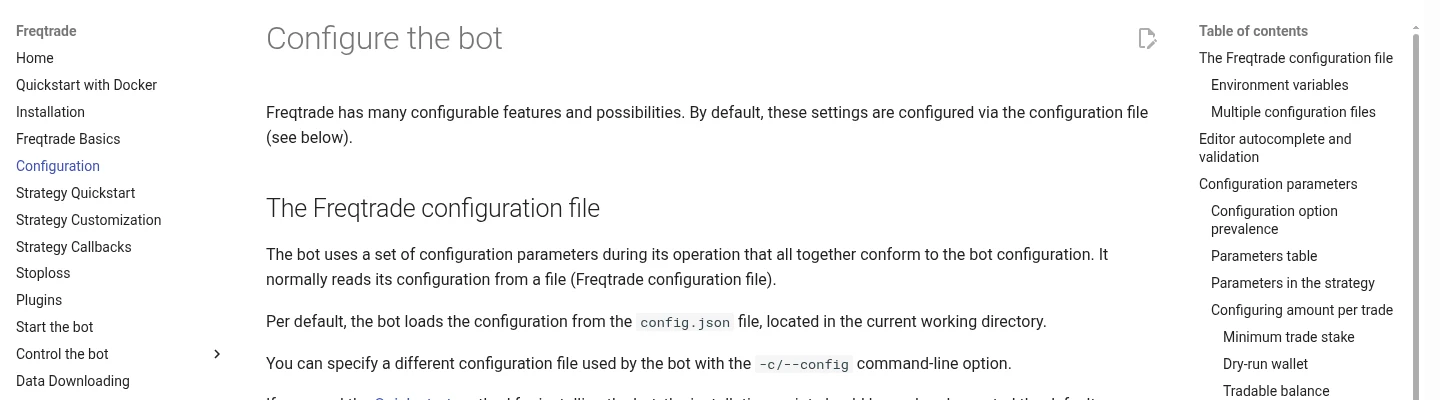
A workable sequence for the route most people take (Freqtrade, single exchange): day one, stand up the VPS, install the framework, run the sample config in dry-run[3]. Week one, backtest a downloaded strategy across three regimes, then dry-run it live and go on holiday from checking it - the point is to see what it does unattended. Week two, wire alerts (bot heartbeat, fill notifications), pin the version, take a config backup, then connect a trade-only, IP-bound key with the smallest balance you take seriously[6].
The decision point arrives around week three: either the framework disappeared into your routine - in which case the lane fits and scaling size is your only real question - or maintenance is already slipping, in which case the honest move is back to the cloud lane or the exchange-native lane[5], where someone else's subscription buys the uptime you cannot provide. Self-hosting is a fit decision, not a superiority ranking; the custody ceiling only matters if the ops floor is actually covered.
One last framing on hardware: this lane scales down beautifully. A 2GB-RAM VPS[1] runs a serious multi-pair Freqtrade setup; the same stack scales up to dedicated boxes for Hummingbot market-making fleets. The constraint is never CPU - it is your ability to observe what the machine is doing with real funds. Choose hardware you can monitor, not hardware you can brag about. Self-hosting remains a fit decision first and an ideology second; this page exists so that decision gets made with numbers instead of forum anecdotes.
A VPS or always-on machine (Freqtrade's minimum is 2GB RAM / 1GB disk / 2 vCPU[1] - a $5-20/mo VPS covers it), command-line comfort, and an ops routine: process supervision, updates, backups, monitoring. The software is free or cheap; the discipline is the cost.
For key custody, yes - keys stay in your local config and never touch a vendor[3]. The 3Commas 2022 leak is the class of incident self-hosting removes[6]. You inherit the other side: a compromised VPS leaks the same keys, with no vendor security team or liability behind it.
Freqtrade for strategy development (Python, backtesting, dry-run, huge community[1]); Hummingbot for market making across 318 connectors[2]; Gunbot if you want a paid desktop app with built-in strategies and no command line; OctoBot for an open-source core with a web interface; Passivbot for futures-native grid/DCA parameter sets.
Software $0-348 (Freqtrade free, Gunbot $29/mo), VPS $54-240[4], plus your time. Compare with cloud subscriptions at $180-1,260/yr[5] - the savings are real if you already have the skills, negative if you pay in hours what you skip in invoices.
The machine must stay online for positions to be managed - a dead VPS means orphaned positions with no stop-loss. Run a process supervisor with auto-restart, and alerts on bot death. This is the single most common self-hosting failure.
Technically yes, practically no: sleep, updates and IP changes break exchange API sessions and fill management. A $5 VPS with a static IP is the honest minimum; home servers work with the same discipline.
You schedule them. Exchanges ship breaking API changes - a framework that misses one fails silently or loudly within weeks. Freqtrade's release cadence and migration notes are the model to follow[1]; pin versions, read changelogs, update on your terms.
Included and free in the serious frameworks: Freqtrade, Hummingbot, Jesse, OctoBot and Passivbot all backtest locally. That is one of the real advantages over freemium cloud tiers, which gate backtesting behind paid plans.
Freqtrade's dry-run mode simulates a wallet against live data[3]; Hummingbot ships paper_trade; Gunbot and OctoBot include paper modes. Use it - a framework you have not paper traded is a hypothesis, not a bot.
No - the exchange's schedule applies identically in every hosting model[7]. What you can optimize is the venue: self-hosting lets you route through cheaper exchanges or fee tiers, which dense strategies reward more than any software feature.
Linux basics, editing YAML/JSON configs, reading logs, and patience for one weekend of setup. Freqtrade recommends Python knowledge for strategy writing[1] - using existing strategies needs less, writing your own needs more.