#1
Pionex
16 free built-in bots inside the exchange itself - zero subscription and no third-party API keys, at 0.05% per side.
No API keys Free tier Pay per use US ok
Bots that run inside the exchange or on your wallet - the 2022 leak class of risk simply does not apply.
Short answer: Pionex is our top-rated no-API-key bot as of 2026-10-18 (7.4/10), fee per trade.
bots on this page: 17 · fully reviewed (active): 17 · free or with a free tier: 17 · need no third-party API keys: 17
quick picks
16 free built-in bots inside the exchange itself - zero subscription and no third-party API keys, at 0.05% per side.
Free grid and DCA bots inside Binance Trading Bots - no third-party API keys, you pay only trading fees.
Bitget's copy-trading market - native to the exchange, public stats, profit share to traders.
Copy traders inside Bybit - your funds stay in your own exchange account, stats are public, profit share applies.

Free grid and DCA bots inside OKX Trading Bots - no third-party API keys, you pay only trading fees.
Free grid and DCA bots inside Gate.io Trading Bots - no third-party API keys, you pay only trading fees.
Popular free grid/DCA bots in-app - the futures grid is community-endorsed, the reinvest option has been buggy.
Free grid and DCA bots inside Bitget Trading Bots - no third-party API keys, you pay only trading fees.
Free grid and DCA bots inside Bybit Trading Bots - no third-party API keys, you pay only trading fees.
The Solana terminal that challenged Photon: 0.7% fees, perps and sub-second execution - anonymous team, expensive segment.

The established Telegram sniper (four chains, own $BANANA token) - fees honestly documented: 0.5% manual / 1% snipes.

Multi-chain sniper terminal (Solana/ETH/BSC/Base) with perps - ~1% fees, JS-only site, treat details as reported.
The most-used Solana memecoin sniper web app - extremely fast, extremely expensive per trade, extremely risky segment.
Memecoin terminal with wallet-copy features (Solana/Tron/Base) - ~1% fees (reported), scam-adjacent segment documented with caution.
The EVM-chain Telegram veteran: trade monitors, positions ledger, multi TP/SL - ~1% fees (reported), anonymous team.
Telegram-first Solana sniper with web mirror - ~0.9% fees (reported), classic sniper risk profile.
The BONK-ecosystem Telegram bot for Solana swaps and sniping - ~1% fees (reported), Telegram-only, memecoin-native.
| Bot | Type | Keys | Price | Free tier | Trade fee | US | EU | Status |
|---|---|---|---|---|---|---|---|---|
| Pionex | Exchange-native | no keys | 0.05% per trade | yes | 0.05% per trade | US | EU | - |
| Binance Trading Bots | Exchange-native | no keys | free | yes | - | - | EU | - |
| Bitget Copy Trading | Copy trading | no keys | unknown | yes | - | - | EU | - |
| Bybit Copy Trading | Copy trading | no keys | unknown | yes | - | - | EU | - |
| OKX Trading Bots | Exchange-native | no keys | free | yes | - | - | EU | - |
| Gate.io Trading Bots | Exchange-native | no keys | free | yes | - | - | EU | - |
| KuCoin Trading Bots | Exchange-native | no keys | free | yes | - | - | EU | - |
| Bitget Trading Bots | Exchange-native | no keys | free | yes | - | - | EU | - |
| Bybit Trading Bots | Exchange-native | no keys | free | yes | - | - | EU | - |
| Axiom | DEX / Telegram sniper | wallet | 0.7% per trade | yes | 0.7% per trade | - | - | - |
| Banana Gun | DEX / Telegram sniper | wallet | 1% per trade | yes | 1% per trade | - | - | - |
| BullX | DEX / Telegram sniper | wallet | 1% per trade | yes | 1% per trade | - | - | - |
| Photon | DEX / Telegram sniper | wallet | 0.9% per trade | yes | 0.9% per trade | - | - | - |
| GMGN | DEX / Telegram sniper | wallet | 1% per trade | yes | 1% per trade | - | - | - |
| Maestro | DEX / Telegram sniper | wallet | 1% per trade | yes | 1% per trade | - | - | - |
| Trojan | DEX / Telegram sniper | wallet | 0.9% per trade | yes | 0.9% per trade | - | - | - |
| BONKbot | DEX / Telegram sniper | wallet | 1% per trade | yes | 1% per trade | - | - | - |
Live values from our database - details and caveats in each review. "-" = not documented.
17 bots in this lane never require a third-party API key - 17 counting by custody model across the full tracked universe. The figure below maps where your keys and funds actually sit in each custody model, and the documented failure of each:
The 3Commas case defines why this lane exists. In late 2022, tens of thousands of trade-only API keys surfaced from a third-party breach; victims lost six figures to unauthorized trades; the vendor denied involvement for weeks, then admitted the leak and told users to delete keys immediately[1][2]. Every mitigation we recommend elsewhere - trade-only scopes, IP whitelisting (OKX recommends strong binding, 20 IPs max, 14-day expiry for unbound keys[3]) - reduces but cannot zero that risk. Exchange-native bots delete it by construction.
The residual risks are real and different:
Set-and-forget grid/DCA: Pionex (0.05% per side), Binance, OKX, Gate, KuCoin, Bybit, Bitget native bots. Strongest where the strategy is single-exchange and mechanical. US access: only Pionex runs a US entity - the others gate US residents.
Copy trading without key custody: Bybit and Bitget's native copy systems - leader trades mirror inside your account. Track records live on the exchange, survivorship bias included; the copy-trading lane has the verification checklist.
DEX sniping: Photon, Axiom, BullX, Trojan, Banana Gun, GMGN, BONkbot - wallet-connected, 0.7-1% per trade. No key vault exists, but approval hygiene, MEV and rug exposure define this category's risk. The sniper lane is the full ledger.
Maximum custody control: self-hosted Freqtrade keeps keys on your own machine - technically still API keys, but no third party ever holds them[4]. If your threat model includes vendors (it should include exchanges too), this is the ceiling of control.
Custody decisions are threat-model decisions, not product decisions. If your primary threat is a vendor breach (the documented 3Commas case[1][2]), this lane solves it. If your primary threat is exchange insolvency or compromise, no lane solves it - not even self-hosted, since the venue still holds the funds; diversification across venues and withdrawal hygiene matter more than bot choice. If your primary threat is yourself - fat-fing approvals, signing drainer transactions - wallet-connected bots concentrate that risk[8], and hardware-wallet signing plus revocation routines are the mitigation.
Regulatory exposure is the last dimension. "No keys" does not mean "no KYC" - exchange-native bots inherit the venue's KYC regime, and the FCA warning list shows that bot-branded unauthorised firms target exactly the users who liked the no-paperwork pitch[6]. Choose the regulated counterparty in your jurisdiction; that choice does more for fund survival than any bot feature.
Finally, keep the custody map current. This lane's population shifts as venues add native bots: the 2025-26 period added copy systems and futures-grid variants to several exchanges. When a new "no-key" offer appears, the three questions that matter: which entity holds funds, which entity can move them, and what does our incident timeline say about both[1][2]. Everything else is interface.
The same diligence applies to wallet bots' fee structures - 0.7-1% per trade plus priority fees and slippage can exceed any subscription on active weeks. Compute your own round-trip cost with the position size calculator before assuming a no-key setup is the cheaper setup; custody benefits and cost benefits are separate axes, and the sniper lane's fee table makes that explicit per bot.
Because a leaked trade-only key is enough to lose money. The 3Commas 2022 leak exposed ~100,000 keys and drained six figures from users - even though the keys could not withdraw[1][2]. The vendor denied, then admitted the breach[2]. Removing the third-party key removes that entire failure class.
Exchange-native bots (Pionex, Binance, OKX, KuCoin, Gate, Bybit, Bitget grid/DCA and the exchange copy-trading systems) run inside your account. Wallet-connected DEX bots (Photon, Axiom, BullX, Trojan, Banana Gun, GMGN, BONkbot) sign with your own wallet.
Two things. For exchange-native bots: the exchange itself - Bybit lost ~$1.5B in February 2025 and Bitget ~$390M in September 2026 to the Lazarus pattern (both covered in our incident timeline). For wallet bots: token approvals and drainer contracts - your signature is the key.
For grid and DCA, mostly yes - with fewer knobs. What you give up: cross-exchange logic, TradingView webhook routing, external signal marketplaces, and per-bot stop-loss lines on some venues. What you gain: no key custody, no subscription, exchange-grade execution.
The legitimate ones connect via wallet session or private-key import inside the bot client; the scam ones ask for seed phrases outright - never share those, the FTC lists that exact pattern[5]. Check token approvals regularly; revoking an old approval closes the classic drainer path.
Yes, on exchange-native copy systems (Bybit, Bitget, OKX): the platform mirrors the leader's trades inside your account - no third-party key vault exists. Dedicated platforms like Zignaly pool funds instead, which is a different custody model entirely.
IP binding limits a leaked key to your listed addresses - a strong mitigation, not a cure (the 3Commas keys were trade-only and still drained accounts[1]). If you must use keys, the [API key security guide](/guides/api-key-security/) is the playbook; this lane avoids the problem.
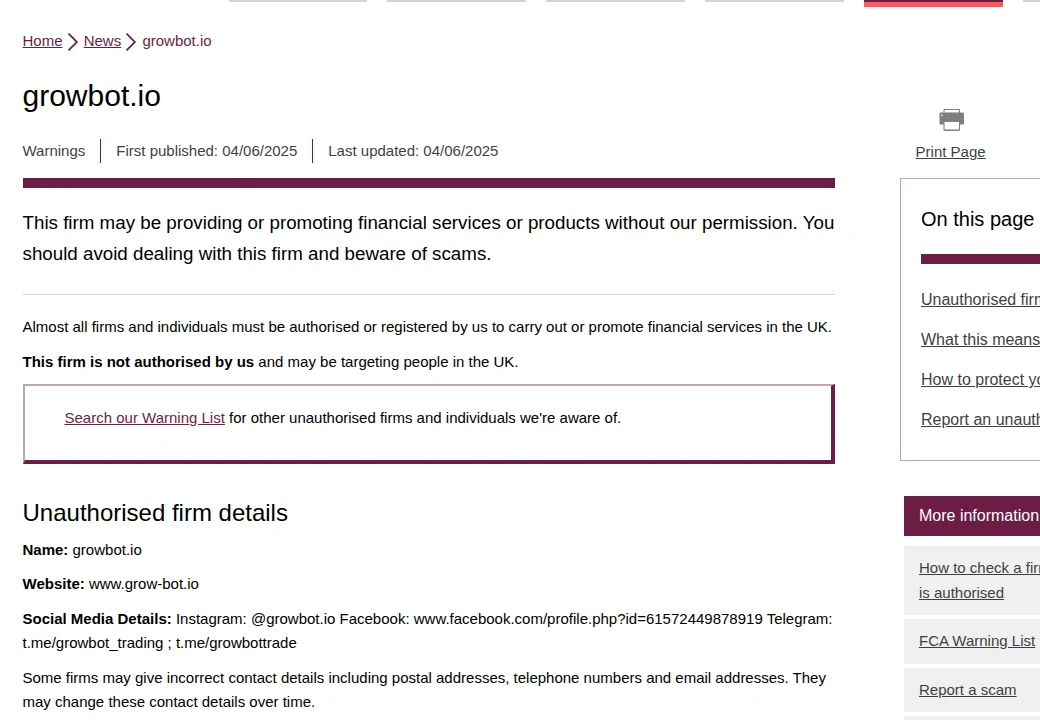
Yes - "no API key needed, just deposit" platforms are often deposit-scam fronts. The FCA's warning list carries bot-branded unauthorised firms (growbot.io was flagged in 2025)[6]. A platform holding deposits holds more than a trade-only key ever did.
No subscription - you pay the venue's trading fee per fill (0.05% at Pionex, 0.1%/0.075% at Binance). That fee line is where all the real cost lives; our grid and DCA hubs quantify it.
On exchange-native bots, rarely - a couple of venues route native signal integration, but webhook-to-order plumbing is a cloud-platform feature. If signals are your requirement, you are choosing between key custody and signal delivery; IP-whitelisted trade-only keys are the middle path.
It connects by account session on the exchange's own domain, or by wallet signature on a verified DEX interface. Anything that asks for an API key "for setup convenience" is by definition not in this lane - and worth running through our [API key security check](/tools/api-key-security-check/).